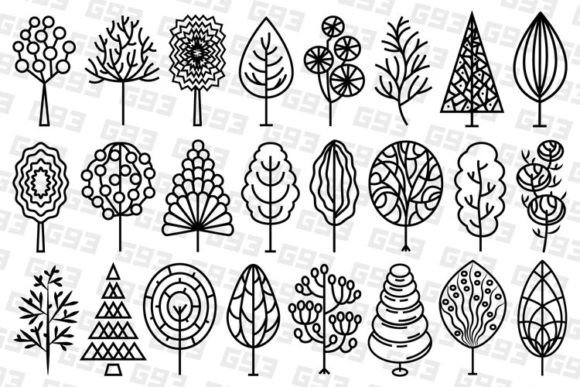
Decorative Line Art Trees: Elevate Your Visual Storytelling
Capturing the essence of nature with a minimalist touch requires a specific kind of artistry. Decorative Line Art Trees offers exactly that—a curated collection of stylized, abstract tree drawings that blend organic beauty with graphic precision. This isn't just a set of doodles; it's a versatile toolkit designed for modern creatives who need assets that are both visually striking and technically flexible. Whether you're building a brand, designing a publication, or crafting a personal project, these illustrations provide a sophisticated foundation.
A Visual Language of Elegance and Simplicity
At its core, the Decorative Line Art Trees collection is defined by its clean, continuous lines and thoughtful abstraction. Each tree is rendered as a single, flowing stroke or a series of deliberate marks, stripping away realistic detail to reveal a more universal, symbolic form. The personality is one of calm sophistication, organic modernism, and playful elegance. The style avoids the clutter of complex foliage, instead focusing on graceful silhouettes, intricate branch patterns, and a sense of balanced composition. This approach makes the art incredibly adaptable—it can feel serene for a wellness brand, whimsical for a children's project, or refined for high-end editorial work. The overall appeal lies in its ability to communicate complex ideas like growth, nature, stability, and creativity through a simple, uncluttered visual language.
Where These Tree Illustrations Shine Brightest
The true strength of Decorative Line Art Trees is its remarkable range across creative domains. In brand identity and logo design, a single, well-chosen tree can become the cornerstone of a visual system, conveying values of growth, sustainability, or organic roots. For packaging design, especially for artisanal foods, natural cosmetics, or eco-friendly products, these illustrations add a layer of authenticity and premium craftsmanship without overwhelming the product information.
In the realm of publishing and editorial design, they serve as perfect chapter headers, section dividers, or decorative elements in magazines, books, and annual reports. Their simplicity ensures they complement, rather than compete with, body text set in a serif font or sans serif font. For web design and social media graphics, the SVG and PNG files are invaluable. They load quickly, scale perfectly for any screen, and add a distinctive touch to website backgrounds, blog post features, or Instagram story highlights. The transparent backgrounds of the PNGs make layering over photos or colored sections effortless.
Beyond commercial use, crafters and hobbyists will find endless applications. These designs are ideal for creating custom stationery, wedding invitations, educational materials, or home décor prints. The vector graphics (AI, EPS, SVG) allow for endless resizing, recoloring, and customization, making them a one-time investment for countless projects.
Integrating Line Art into Your Design Workflow
Choosing and using a creative font or asset like this effectively requires a bit of strategy. First, evaluate the project's personality. Does it need a touch of nature, a sense of whimsy, or a mark of sophistication? Decorative Line Art Trees excels in adding that organic, human touch to digital or minimalist layouts. Consider the visual hierarchy. A large, detailed tree illustration can serve as a focal point, while a smaller, simpler version can act as a subtle supporting element.
A crucial step is testing font pairing. These illustrations work beautifully with a wide array of typefaces. For a clean, modern look, pair them with a geometric sans serif font. For a more classic, literary feel, combine them with a elegant serif font. Even script fonts or handwritten fonts can create a charming, personalized aesthetic when used sparingly alongside a line art tree. The key is to let the illustration breathe; avoid surrounding it with overly decorative or complex typefaces that could create visual noise.
Take advantage of the included file formats. Use the JPG files for quick mockups or when a fixed background is needed. The PNG files with transparent backgrounds are perfect for layering in design software like Canva, Photoshop, or Figma. For projects requiring infinite scalability—like large-format printing, laser cutting, or detailed editing in Adobe Illustrator—the SVG, AI, and EPS vector files are essential. You can adjust stroke weights, combine elements, or change colors to match your exact brand identity palette.
Always test for readability and impact at the intended size. A intricate tree design might lose its clarity when reduced to a tiny favicon, but it will look stunning as a website hero image. Finally, ensure you understand the licensing. These assets are provided for both personal and commercial use, giving you the freedom to incorporate them into client projects, products for sale, and marketing materials without hesitation. By thoughtfully integrating these design assets, you add a layer of professional polish and organic charm that resonates with audiences, making your work more memorable and engaging.