Traditional Chinese Decorative Oriental: A Festive Guide to Ornamental Design
When you are building a brand or designing a piece of marketing collateral, the visual language you choose speaks volumes before a single word is read. If your goal is to evoke a sense of heritage, celebration, or luxurious craftsmanship, standard corporate fonts often fall short. This is where the specific aesthetic of Traditional Chinese Decorative Oriental design assets comes into play. These are not just simple typefaces; they are intricate systems of art, often featuring ornamental frames, festive motifs, and vector illustrations that bring a specific cultural richness to modern projects.
For designers, entrepreneurs, and content creators working within the Asian market—or those looking to incorporate Eastern aesthetics into global branding—understanding how to leverage these decorative elements is crucial. The style is defined by intricate line work, symmetry, and a sense of ceremony. Whether used on a digital banner or a physical greeting card, these assets offer a bridge between ancient tradition and modern vector precision.
Decoding the Visual Language of Oriental Ornament
The term "Traditional Chinese Decorative Oriental" encompasses a wide range of visual elements. At its core, this style relies on high-contrast details and ornamental borders. You will often see motifs derived from nature—peonies for wealth, bamboo for resilience, and dragons for power—integrated into the structure of the design. The "personality" of these assets is authoritative yet celebratory. It is a style that demands attention through complexity rather than minimalism.
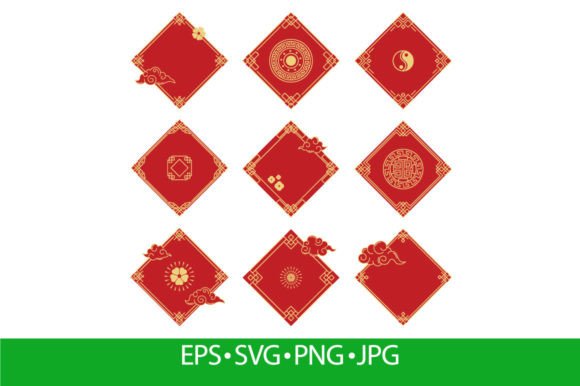
Unlike a standard display font that focuses solely on the letterforms, these decorative sets often include vector illustration components. Think of ornamental corners, horizontal dividers, and circular medallions. These elements are designed to frame content, making them ideal for packaging design and editorial design. The visual appeal lies in the balance between positive and negative space. A well-designed Oriental ornament allows the eye to rest on the content while the borders provide a rhythmic, structured visual experience.
Practical Applications: From Branding to Festive Cards
The versatility of these design assets is one of their strongest selling points. For small business owners, particularly those in the tea, wellness, or luxury food industries, these assets are invaluable for brand identity. Imagine a tea packaging box where the label isn't just a sticker, but a framed piece of art using a Traditional Chinese Decorative Oriental border. It immediately communicates quality and authenticity to the consumer.
For those in the event planning or stationery niche, the application is even more direct. The "festive cards" aspect of these designs is perfect for Lunar New Year promotions, wedding invitations, or VIP event passes. Because these assets are often available in EPS, SVG, PNG, and JPG formats, they are highly adaptable. You can use the SVG files for infinite scaling on large posters and banners, while the PNG files work perfectly for quick social media graphics or website overlays.
Consider a digital marketer creating a landing page for a sale. Instead of using a generic red banner, utilizing a traditional banner asia oriental vector adds a layer of cultural relevance that generic stock art cannot match. It changes the user's perception from a "standard sale" to a "cultural event."
Strategic Integration: Typography and Hierarchy
One of the challenges with highly decorative styles is maintaining readability. This is where the distinction between a decorative asset and a functional typeface becomes important. When using Chinese frames cards or ornamental borders, you must ensure they do not compete with your primary message.
A common mistake is pairing an ornate Oriental frame with an equally complex script font or handwritten font. This creates visual noise. Instead, the best practice is to pair these intricate Asian ornamental decorative frames with clean, modern typography. A sans serif font with generous kerning works exceptionally well inside these frames. The clean lines of the text provide a resting place for the eyes, allowing the ornamental frame to serve as the accent piece rather than the main course.
For example, if you are designing a menu for an upscale restaurant, you might use the ornamental vector elements to separate sections or highlight the chef's specials. The body text should remain a legible serif font or sans serif font to ensure customers can actually read the dishes. The decorative elements influence the visual hierarchy, guiding the reader's eye to the most important information first.
Evaluating and Choosing Your Assets
When sourcing Traditional Chinese Decorative Oriental assets for a project, you need to look beyond the aesthetic appeal and evaluate the technical utility. Since these designs are often used for logo design or high-resolution print, the quality of the vectors is paramount. Look for assets that offer clean anchor points and smooth curves. A jagged line in an ornamental frame is immediately noticeable and cheapens the brand perception.
Furthermore, consider the licensing. If you are a publisher or a crafter selling physical goods, you need to ensure the commercial font or asset license covers print-on-demand or merchandise. Many "free" assets are for personal use only. Using them in a commercial product can lead to legal issues down the line. Always verify if the license is per-seat or per-project, especially if you are working within a design agency.
Testing the assets in black and white is another practical step. While these designs often shine in red and gold—colors associated with luck and prosperity—they must maintain their structural integrity in monochrome. This ensures they work well on stamps, watermarks, or faxed documents where color fidelity is lost.
Modernizing Tradition for Digital Spaces
While the roots of this style are ancient, the application is often thoroughly modern. We are seeing a resurgence of Traditional Chinese Decorative Oriental elements in UI design and digital storytelling. Apps focused on meditation, history, or language learning often use these motifs to create an immersive atmosphere.
However, the key to modern application is restraint. A full ornamental frame might be too heavy for a mobile interface, but a cropped section of that frame—used as a background texture or a button accent—can be very effective. This is where the variety of file formats becomes useful. By isolating a specific element from an EPS file, you can create a unique UI element that feels cohesive with the broader brand identity.
For content creators and bloggers, these assets offer a way to break the monotony of standard grid layouts. Using a decorative divider between paragraphs or an ornamental frame around a pull quote can significantly increase reader engagement. It signals to the audience that the content is curated and premium, much like a premium font elevates a document compared to a default system font.
The Psychology of the Frame
Why do these frames work so well for festive cards and invitations? Psychologically, a frame implies containment and importance. It tells the viewer, "What is inside this border is special." In the context of Traditional Chinese Decorative Oriental design, this effect is amplified by cultural connotations of luck, protection, and celebration.
When you send a client a proposal wrapped in these visual cues, you are subconsciously framing your business as established and respectful of tradition. For markets that value these traits, the impact on audience engagement is measurable. It builds trust faster than a generic corporate template.
Final Recommendations for Designers and Entrepreneurs
To get the most out of Traditional Chinese Decorative Oriental assets, treat them as the jewelry of your design, not the clothing. They should adorn and accentuate, not overwhelm.
- For Logo Design: Use simplified elements. A full ornamental frame is often too detailed for a favicon or small print. Extract a single icon or a stylized corner to create a recognizable mark.
- For Packaging: Go bold. Use the full Asian ornamental decorative frames to create a luxurious unboxing experience. Ensure the paper stock matches the quality of the design.
- For Web Design: Use these assets for hero images or section dividers. Ensure the file size is optimized; heavy SVGs can slow down load times.
- For Font Pairing: Contrast is king. Pair the ornate style with a geometric sans serif font for a modern look, or a classic serif font for a more formal, editorial feel.
Ultimately, Traditional Chinese Decorative Oriental design is about storytelling. It tells a story of craftsmanship, history, and celebration. By integrating these vector illustrations and festive frames thoughtfully, you can elevate a standard project into a memorable visual experience that resonates deeply with your audience. Whether you are crafting a wedding invitation or a global marketing campaign, these assets provide a robust toolkit for visual distinction.